
This past Sunday marked the centenary of Camilo Pessanha’s death. Born in Coimbra in 1867, the symbolist poet behind the “Clepsydra” is celebrated throughout Macao where visual tributes include a brick mural in front of the Portuguese Consulate and a bronze statue alongside his dog Armino.
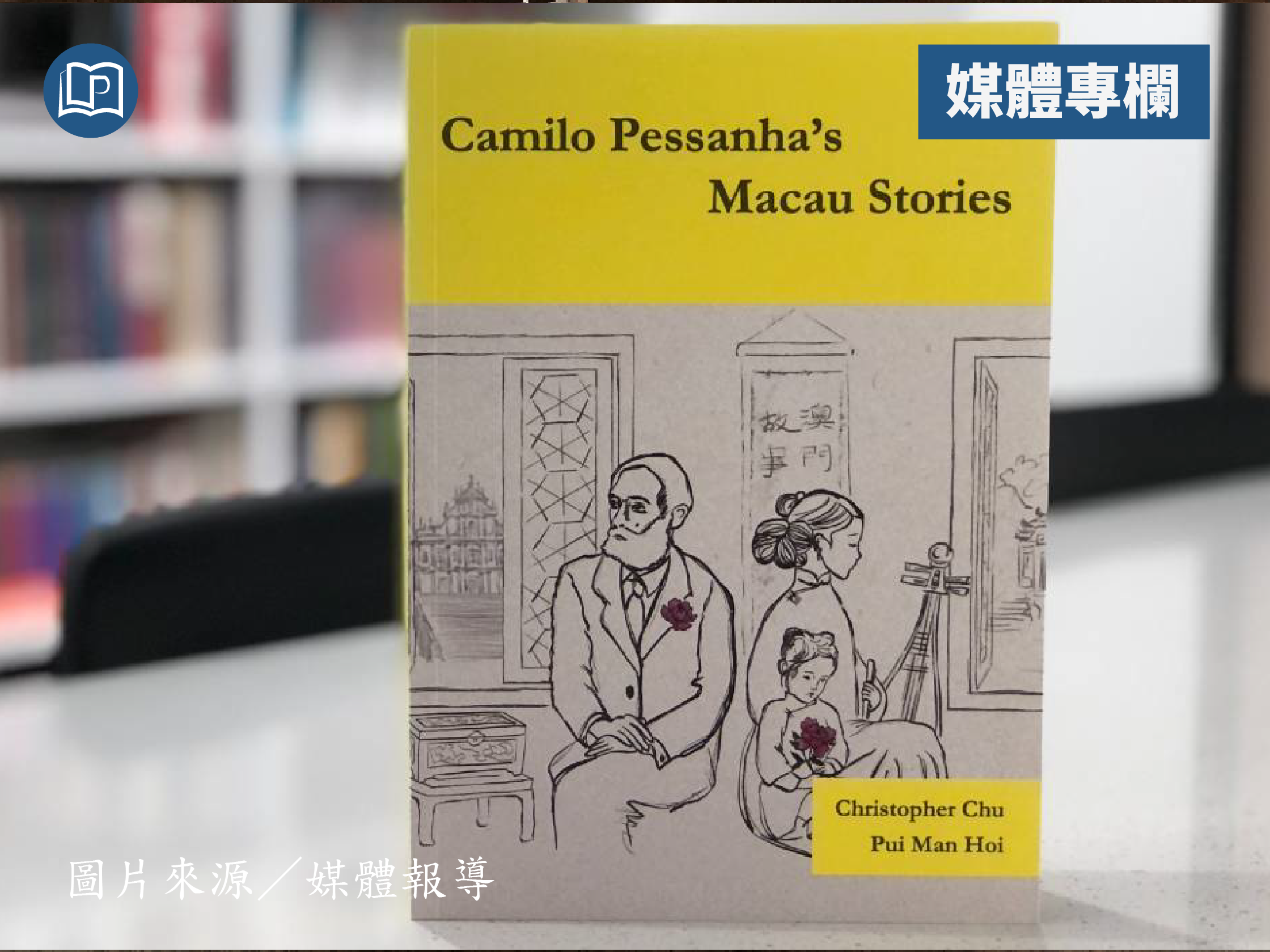
A dedication to Pessanha kicked off this year’s Macau Literary Festival, which runs from March 5 to 15. Inside Casa Garden, an invited panel read select verses of the poet’s work and then discussed his legacy. Among those invited were Christopher Chu and Maggie Hoi, co-authors of “Camilo Pessanha’s Macau Stories,” a historical narration shared from the perspective of the famed literary figure, published in 2023 by Os Macaenses Publicações.
“Despite his popularity, little is known about Pessanha beyond his ‘Clepsydra,’ and what is discussed is often misinterpreted, in our opinion,” Chu remarked. “Our book was written not to shed new light on his life, but rather to examine the changes unfolding in Macao and Portugal, and how those events may have influenced his writings.”
“Camilo Pessanha’s Macau Stories” is Chu and Hoi’s second literary project, published between the 2022 release of “Macau’s Historical Witnesses” and last year’s “Macau’s Historical Flavors.”
Those books, the authors describe, recount the city’s history through the purview of its famed landmarks and unique gastronomical identity respectively. Though their Pessanha book contains historical facts about the poet and Macao, neither of the writers considers this work a biographical or historical account.
“Camilo Pessanha’s Macau Stories” is effectively an extension of our previous formats, if anything, we’re storytellers, co-author Hoi shares.
Camilo Pessanha’s Macau Story
Camilo Pessanha arrived in Macau in 1894 where he initially taught at the newly established Liceu de Macau before serving intermittently as a lawyer, judge, and head of the land registry. He was an avid collector of Chinese art and wrote poetry that was later consolidated into the “Clepsydra.”
But he was also no stranger to controversy. Pessanha’s Bohemian and outspoken personality provoked disapproval from the community, calling into question his moral character. Yet, despite those criticisms, he remained close to his harshest detractors, appearing together in later photographs and even sharing an office with some. To address the contradictions, the co-authors alternated between third- and first-person narration throughout “Camilo Pessanha’s Macau Stories” to provide their protagonist a voice.
“The story we present is based on well-documented research and letters from associates. And because we know how each incident ended, we can infer how Pessanha must have reacted. We chose to use a multi-person narrative approach to enable him to share his side with the audience,” Chu says.
In addition to those confrontations, moments of personal intimacy are also discussed in the book. Much of Pessanha’s life can be seen through his correspondence with other noted Portuguese figures, including Wenceslau de Moraes, the famed writer and Japanese consul who was a mentor to the younger Pessanha. There are also exchanges with Ana de Castro Osório, a prominent advocate for women’s rights in the early 20th century, whose relationship with Pessanha is believed to have influenced his decision to move to Asia.
Camilo Pessanha today
Hidden beneath the neon glow of the integrated resorts, much of Pessanha’s Macao still stands even a century after his death. Clube Militar, the pink building where Pessanha and a delegation of local officials welcomed Sun Yat-sen in May 1912, remains open to serve hungry guests. Next to Casa Garden is the bust of famed poet Luís de Camões, where Pessanha was photographed with close confidants. The current Instituto Cultural de Macau (ICM) building previously housed the Liceu de Macau, where Pessanha and his dog Armino joined students inside the classroom.
While “Camilo Pessanha’s Macau Stories” is currently only available in English, Chu and Hoi are broadening their audience by publishing their book into different languages. A Portuguese translation is in the works, spearheaded by Macao-born Ivo de Noronha Vital, who previously translated “Macau’s Historical Witnesses” by taking the title “Testemunhas da História de Macau.”
“Pessanha’s body of work incarnates a quintessential Portuguese sensibility while reflecting a paradoxical ‘familiar alienness’ of Macao” Vital remarks, noting that his translation aims to complement the original text while deepening Macao’s relationship with Pessanha, particularly among the Portuguese-speaking community.
In addition to the Sunday panel, the Macau Literary Festival will host a supplementary discussion on Camilo Pessanha’s work at Instituto Português do Oriente (IPOR) this Tuesday while further programmes are scheduled for the year ahead.
But for the trio of Chu, Hoi, and Vital, they hope that their Camilo Pessanha’s story can extend beyond the centenary, allowing future readers to connect with the city’s past. At least for another hundred years.
【EJ Insight】Camilo Pessanha’s Macau Stories: A Poet and His City
https://www.ejinsight.com/eji/article/id/4329061/260302-Camilo-Pessanha